Cognitive Load Variations Across Genre Combinations in Contemporary Online Play Sessions
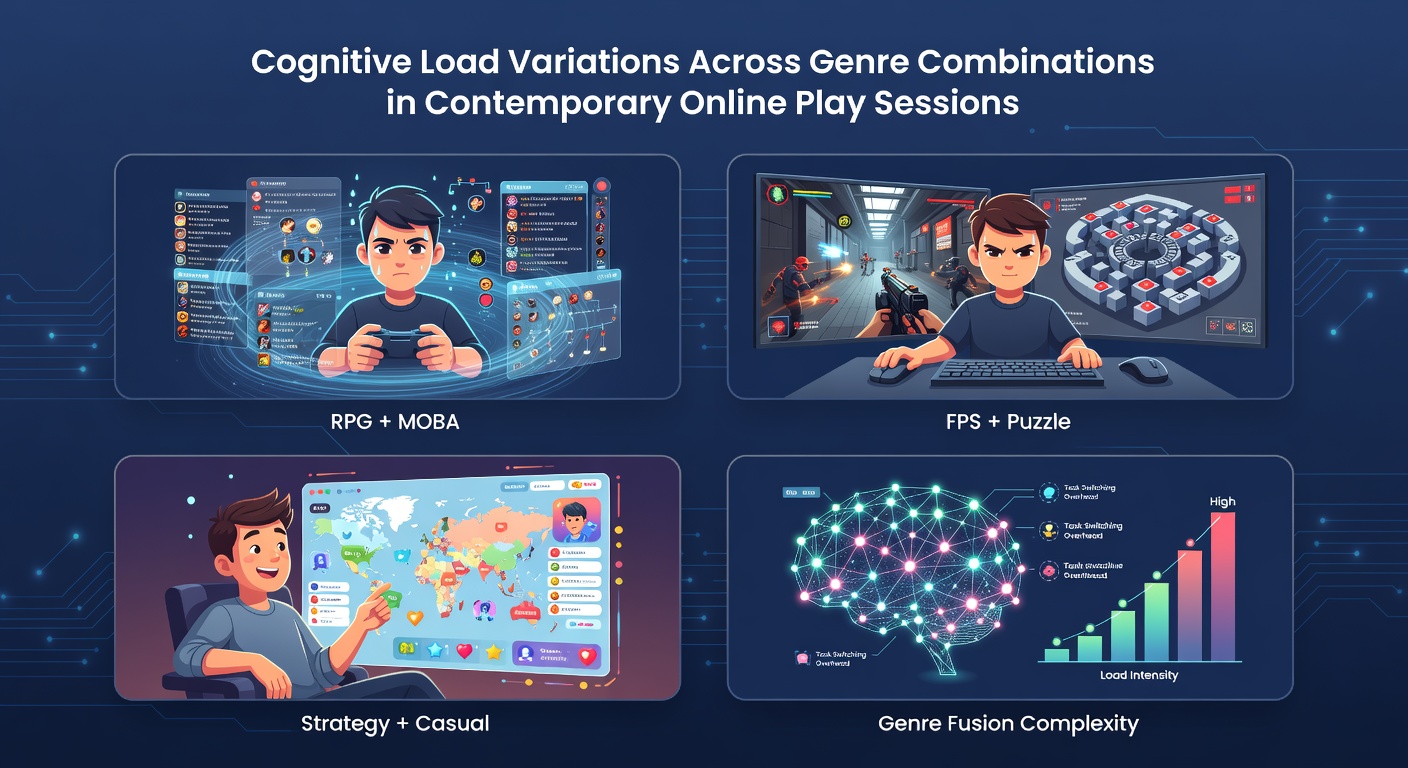
Researchers tracking player performance across digital platforms have documented measurable differences in cognitive load when users engage with combined game genres during online sessions, and these patterns hold steady through mid-2026 data collections. Cognitive load refers to the mental effort required to process information, make decisions, and coordinate actions within interactive environments, while genre combinations such as strategy layered over action sequences or puzzle elements integrated into racing frameworks alter how that effort distributes across attention networks.
Defining Cognitive Load in Multiplayer Contexts
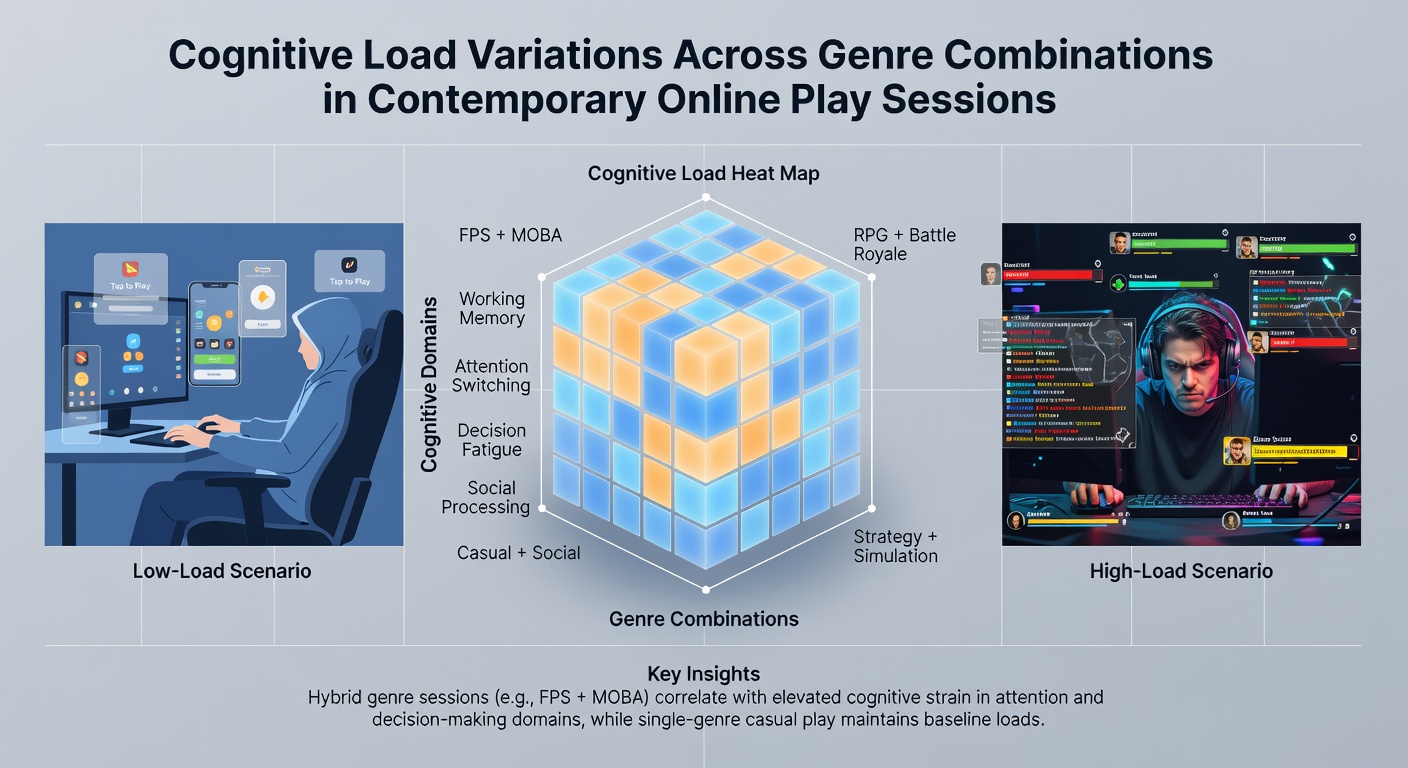
Studies separate cognitive load into intrinsic components tied to the core mechanics of each genre, extraneous elements introduced by interface design, and germane aspects that support learning and adaptation, and observers note that blended genres often elevate intrinsic load because players must simultaneously track spatial navigation, resource management, and timed responses. Data from sessions recorded on community platforms indicate that single-genre play maintains steadier load curves, whereas hybrids produce spikes during transition moments between mechanics.
Genre Pairings and Measured Load Shifts
Action elements fused with strategy layers require players to allocate working memory toward both immediate threat assessment and long-term planning, and researchers at multiple institutions have recorded elevated prefrontal cortex activation during these overlaps compared with isolated play. Puzzle mechanics added to racing formats increase visuospatial demands while players solve route challenges under time pressure, yet the same data sets show that certain combinations allow partial load offloading when cooperative teammates handle complementary tasks.
Patterns Observed in Recent Platform Data
Platform analytics compiled through June 2026 reveal that sessions involving three-genre blends sustain higher average load durations than two-genre pairings, and participants demonstrate faster recovery times when interfaces provide clear visual segmentation between mechanic types. Those who studied skill transfer across genres found that prior exposure to puzzle-action hybrids reduced subsequent load in racing-strategy sessions, suggesting transferable mental frameworks rather than complete resetting of cognitive resources.
One research team examining web-based multiplayer environments reported that decision latency increased by measurable margins during genre switches, although the effect diminished after repeated exposure within the same session. Another group focused on networked sports-strategy crossovers documented that team coordination lowered individual load when roles aligned with specific genre strengths, such as one player managing puzzle navigation while others handled action bursts.
Factors Modulating Load Across Combinations
Session length interacts with genre density because extended play allows habituation that gradually lowers extraneous load from unfamiliar control mappings, while shorter bursts preserve higher peaks tied to novelty. Network latency adds an external variable that compounds existing demands, and evidence from distributed player logs shows greater variance in load scores during high-latency periods regardless of genre mix.
Age and experience cohorts display distinct profiles, with data indicating that younger participants often sustain elevated load across rapid genre transitions whereas more experienced users redistribute attention more efficiently. Interface customization options, when available, correlate with reduced overall load according to controlled comparisons conducted on major portals.
Research Approaches and Data Sources
Investigators employ dual-task paradigms, eye-tracking, and self-report scales to quantify variations, and these methods converge on the finding that genre combinations producing high intrinsic load also generate greater post-session fatigue indicators. Australian Research Council supported projects have contributed longitudinal datasets that track load trajectories over multiple sessions, while international gaming research compilations aggregate findings from European and North American labs to highlight consistent cross-regional patterns.
Platform operators release anonymized engagement metrics that researchers cross-reference with laboratory findings, and these combined sources confirm that certain blends, particularly those pairing stealth with real-time strategy, produce load signatures distinct from action-puzzle pairings. Observers continue to refine measurement protocols as new hybrid titles enter circulation.
Conclusion
Contemporary evidence establishes that cognitive load varies systematically with genre combinations in online play sessions, driven by the additive and interactive demands each mechanic imposes on attention and memory systems. Continued monitoring through platform analytics and controlled studies will clarify how design choices and player adaptation shape these variations over time.