Genre Blending Impacts on Decision Speed in Web-Based Multiplayer Sessions
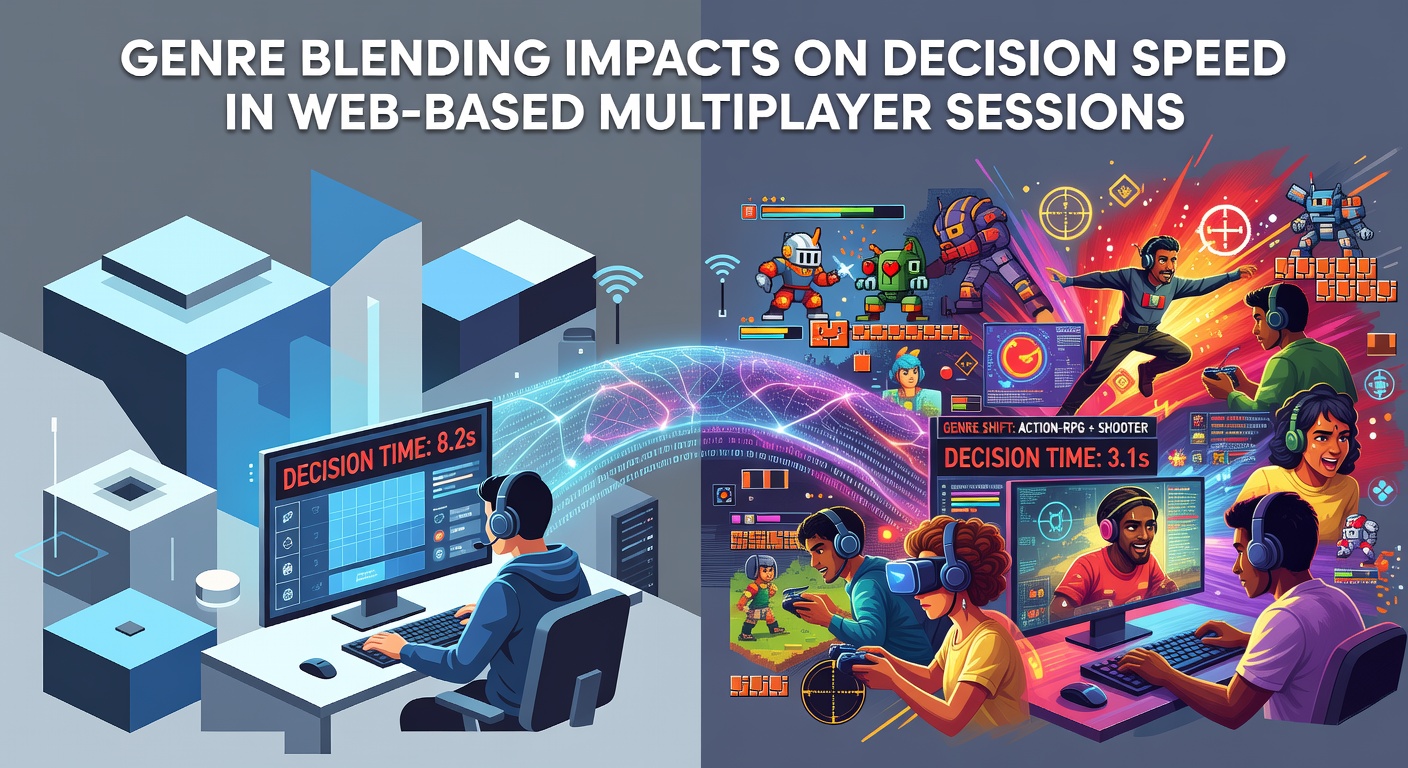
Web-based multiplayer sessions have incorporated blended genres for years, and researchers continue to examine how mixing elements like strategy, action, and puzzle mechanics alters the pace at which participants reach decisions during live play. Studies track response intervals in hybrid environments where users must switch between resource allocation and real-time combat choices, and data collected through platform analytics shows measurable shifts in average decision latency compared to single-genre formats.
Defining Genre Blending in Online Multiplayer Contexts
Genre blending occurs when developers integrate mechanics from distinct categories into unified sessions, such as combining turn-based planning layers with continuous movement controls in browser-accessible arenas. Participants encounter overlapping demands that require rapid assessment of multiple variables, and this structure appears in titles released through community platforms where users join from various regions. Observers note that such designs emerged prominently as web technologies improved support for synchronized inputs across devices.
According to findings from the Interactive Software Federation of Europe, hybrid game updates in 2025 led to increased session durations because players adapted to layered rule sets. Those adaptations involve processing visual cues from action sequences alongside strategic overlays, which creates distinct cognitive pathways that differ from traditional single-focus games.
Measured Effects on Decision Timing
Performance logs from web multiplayer servers reveal that blended mechanics often compress decision windows, particularly when puzzle elements interrupt action flows or strategy components overlay racing sequences. Users must evaluate combined inputs within shorter intervals, and aggregated telemetry indicates average response times drop by measurable percentages in sessions exceeding thirty minutes. This pattern holds across different demographic groups tracked in longitudinal platform data.
Key Variables Influencing Speed
- Simultaneous mechanic activation that forces parallel processing of objectives
- Feedback loops where puzzle resolutions immediately affect action outcomes
- Group coordination requirements that blend individual quick choices with collective planning
Canadian research teams at the University of Waterloo documented similar trends in controlled experiments conducted through browser-based test environments. Their observations highlighted how hybrid interfaces reduce hesitation periods once players internalize the combined systems, although initial exposure phases show extended deliberation before stabilization occurs.

Patterns Observed in May 2026 Platform Data
Reports compiled in May 2026 from major web gaming networks indicated continued refinement of blending techniques, with decision speed metrics stabilizing in sessions that featured balanced integration rather than abrupt mechanic shifts. Analysts examined thousands of concurrent matches and identified consistent acceleration in choice execution when puzzle layers supported rather than competed with core action loops. Those patterns emerged most clearly in games that allowed seamless transitions between planning phases and execution bursts.
Industry tracking groups further noted regional variations, where participants in high-bandwidth areas maintained faster baseline speeds regardless of genre mix. The data also pointed to training effects, as repeated exposure to the same hybrid title produced progressive reductions in decision latency over successive sessions.
Comparative Analysis Across Session Types
Side-by-side evaluations of pure strategy sessions versus blended counterparts demonstrate that the addition of action or puzzle components alters not only speed but also error rates during critical moments. Participants in hybrid environments register quicker selections yet encounter higher correction frequencies when mechanics overlap without clear prioritization cues. Researchers continue to map these trade-offs through ongoing server-side monitoring tools that log timestamped inputs.
What's interesting is how group dynamics amplify or dampen these effects, since coordinated teams often distribute decision loads across roles, allowing individual members to focus on narrower mechanic subsets. This division appears in session replays where specialized players handle strategy elements while others manage immediate action responses.
Conclusion
Genre blending in web-based multiplayer sessions produces measurable changes in decision speed, with platform records and academic examinations confirming both acceleration and adaptation patterns across varied implementations. Continued monitoring through 2026 and beyond will clarify how evolving web technologies further shape these interactions in live group environments.