Mapping Player Engagement Across Blended Digital Entertainment Options in Community-Focused Platforms
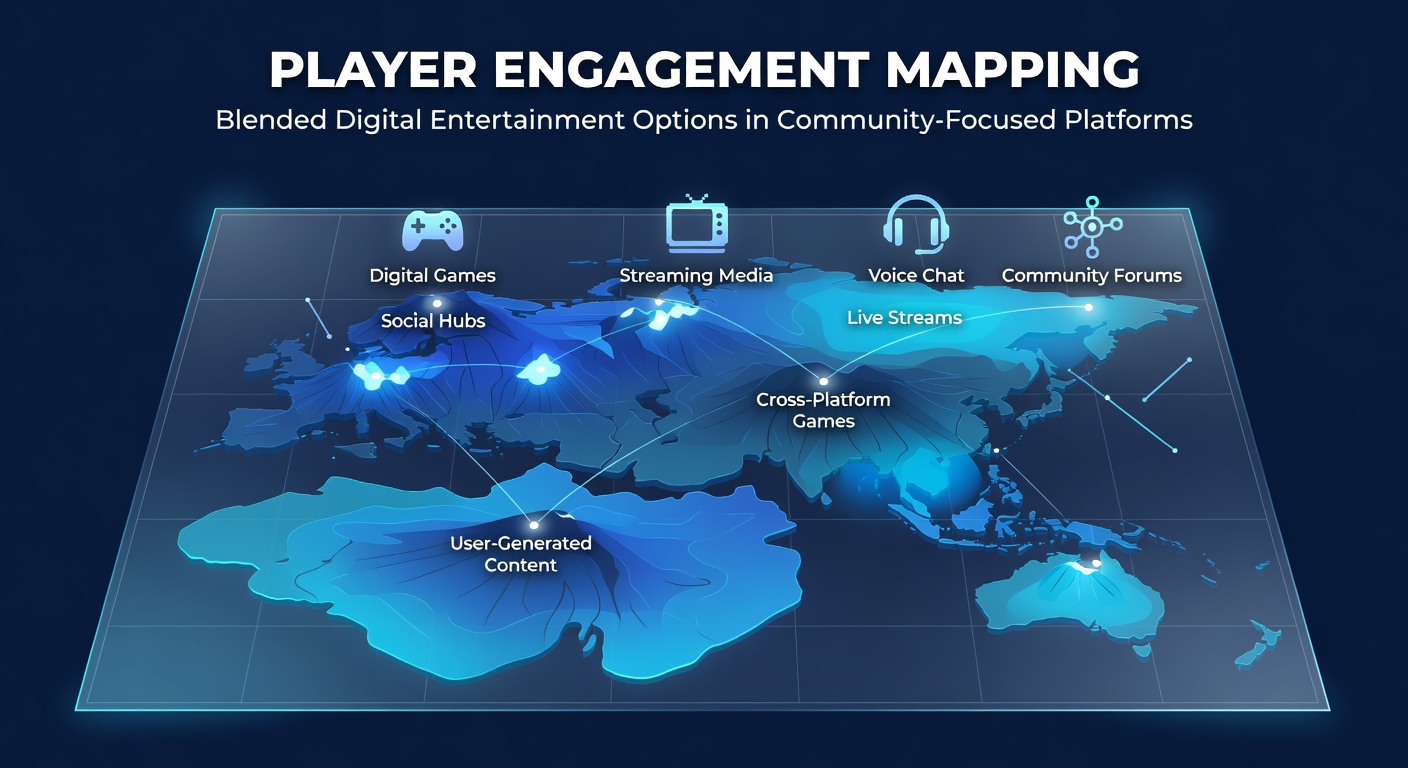
Platforms that combine games, social features, and interactive media have drawn increasing attention from analysts who track how users spend time across multiple entertainment formats. In these environments players move between competitive matches, creative tools, live streams, and discussion forums without leaving the same digital space, which creates layered patterns of participation that researchers now measure through integrated analytics systems.
Current Landscape in Mid-2026
Data collected through platform dashboards during May 2026 shows steady growth in blended sessions where individuals switch between genres within a single login period. Reports from the Entertainment Software Association indicate that community servers hosting both action sequences and collaborative building activities recorded average session lengths extending beyond traditional single-genre titles. Observers note that these extended stays often stem from seamless transitions rather than isolated play bursts, as users shift from one activity to another while maintaining ongoing group conversations.
Industry trackers have documented similar trends across regions, with European and North American services reporting parallel increases in cross-format engagement. Figures from academic reviews published in early 2026 highlight that retention rates improve when platforms embed quick-access tools for both competitive and casual modes side by side, allowing participants to sample different experiences without restarting applications or switching accounts.
Measurement Approaches
Engagement mapping relies on heat maps that record time allocation across activity types, combined with social graph analysis that follows message volume and group formation. Researchers at several universities have applied these methods to large datasets, revealing that users who begin in one entertainment category frequently migrate to another within the same community hub. Such movement creates measurable loops where initial participation in fast-paced elements leads to longer-term involvement in slower, discussion-based sections.
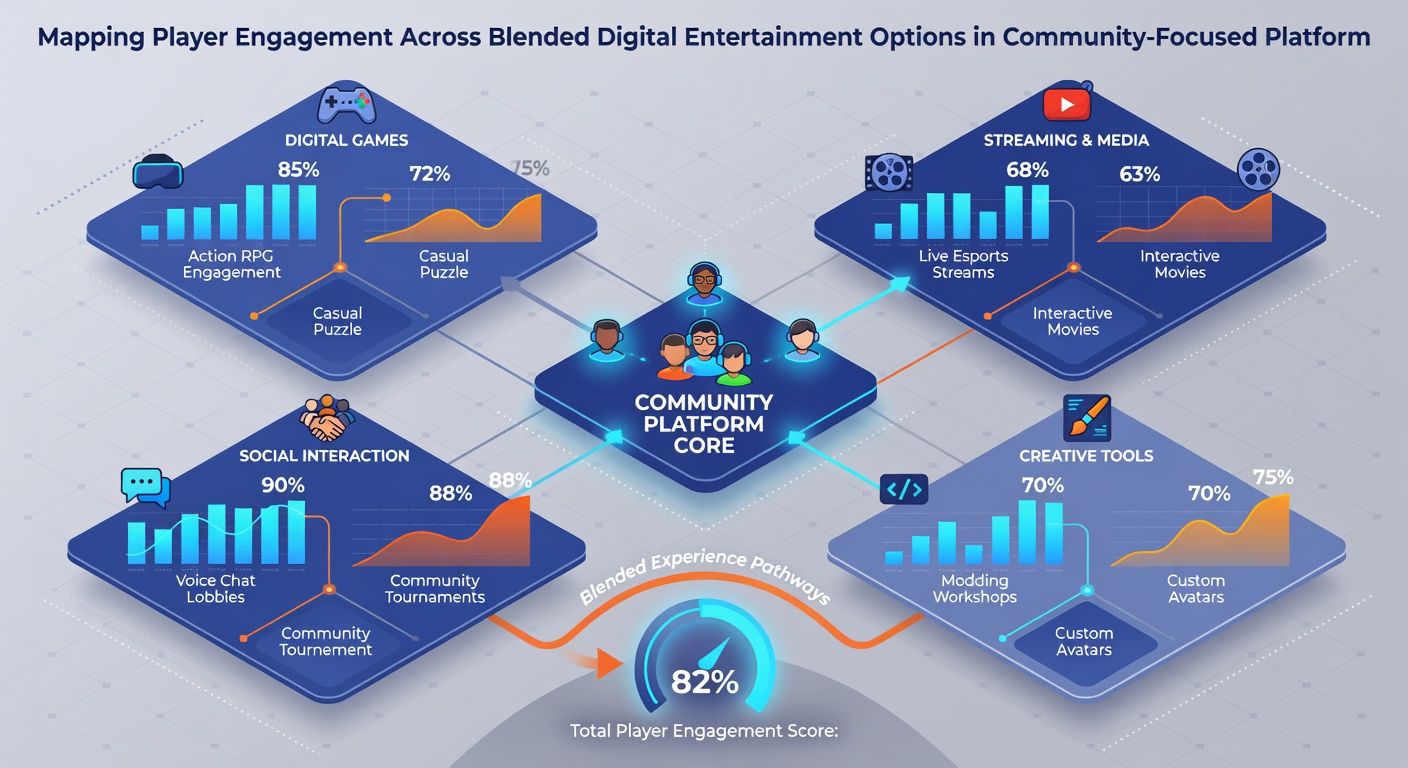
Platform operators now integrate these insights into real-time adjustments, such as suggesting related activities based on recent time spent. According to a joint report released by Canadian digital policy researchers and industry partners, this type of recommendation loop correlates with higher daily active user counts in community-oriented services compared with standalone game portals.
Regional Variations and Platform Examples
Different geographic markets exhibit distinct blending preferences. Australian community networks emphasize creative and narrative modes alongside competitive play, while North American services often prioritize rapid transitions between action sequences and spectator viewing tools. One study from an Asia-Pacific research consortium found that platforms offering synchronized event calendars across entertainment options achieve more consistent participation spikes during scheduled community gatherings.
Take the case of a major multiplayer service that introduced unified progression systems in late 2025. Participants who advanced through puzzle elements earned bonuses usable in racing or strategy modes, and subsequent data showed elevated cross-category completion rates. Analysts tracking these changes observed that community chat volume rose in tandem, suggesting the blended mechanics also strengthened social ties within the platform.
Challenges in Data Interpretation
Despite advanced tracking tools, separating genuine engagement from passive presence remains difficult. Sessions that appear lengthy may include extended periods of background monitoring rather than active input, which complicates direct comparisons across platforms. Those studying these metrics emphasize the need for multi-signal verification that combines input frequency, social interaction logs, and content creation counts before drawing conclusions about overall involvement levels.
Yet platform teams continue refining their models. Recent updates in May 2026 introduced finer-grained categorization that distinguishes between spectatorship, collaborative building, and direct competition within the same session timeline, yielding clearer pictures of how blended options influence total time investment.
Conclusion
Mapping player engagement across blended digital entertainment options continues to evolve as community-focused platforms expand their feature sets. Current data sets from 2026 demonstrate that integrated environments support longer and more varied participation patterns than single-format services, provided measurement systems account for seamless activity shifts. Ongoing refinements in analytics, supported by contributions from regulatory bodies and academic groups across multiple regions, help clarify these dynamics and guide future platform development.