Vehicular Showdowns: Racing-Shooting Hybrids Dominate Multiplayer Battlegrounds
Vehicular Showdowns: Racing-Shooting Hybrids Dominate Multiplayer Battlegrounds
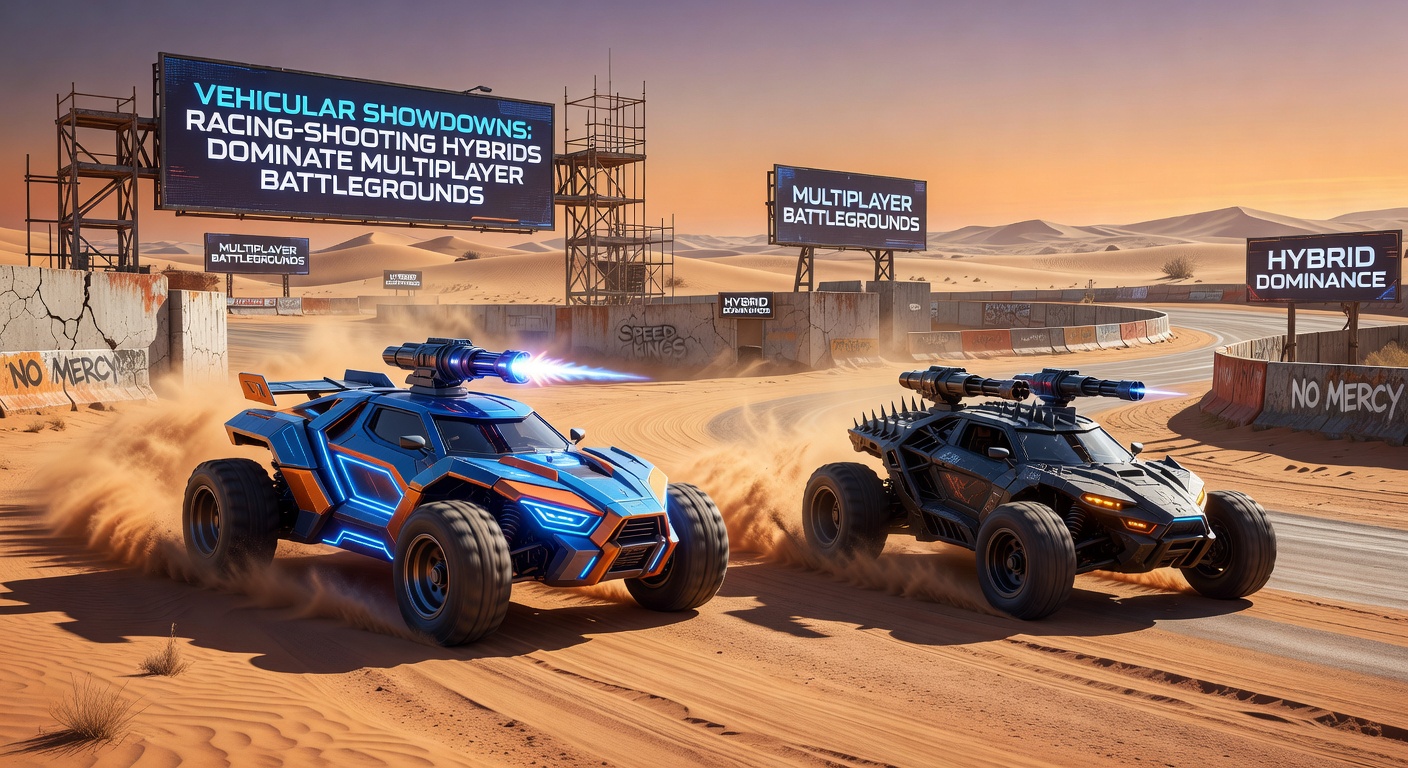
Multiplayer battlegrounds pulse with the roar of engines and the crack of gunfire these days, as racing-shooting hybrids surge to the forefront of online gaming; players command tricked-out rides that weave through obstacle-strewn maps, dodging projectiles while lining up their own shots, and figures from industry trackers confirm this blend now anchors top concurrent player lists on platforms like Steam and Epic Games Store.
Tracing the Tracks: How the Genre Evolved
Developers first fused high-octane racing with explosive combat back in the mid-1990s, when Twisted Metal launched on PlayStation and pitted remote-controlled cars in demolition derbies armed with homing missiles, flamethrowers, and ricochet grenades; that game sold over 700,000 copies in its first year alone, sparking a wave of imitators like Vigilante 8 on Nintendo 64 and Dreamcast, where players raced across open deserts blasting rival convoys with rocket launchers and oil slicks.
Fast-forward through the dial-up era, and broadband internet transformed these solo skirmishes into persistent online arenas; titles like Interstate '76 added blaxploitation flair to '70s muscle cars packing shotguns and mines, while the 2000s brought Full Auto, which ditched damage models entirely so vehicles respawned mid-race, guns blazing uninterrupted. But here's the thing: the real explosion hit with free-to-play models around 2015, as Crossout from Gaijin Entertainment let crafters assemble post-apocalyptic beasts from scrap, then hurl them into 8v8 battles blending drag-strip sprints and turret shootouts.
Observers note how physics engines matured alongside, enabling destructible environments where a well-timed barrel roll evades cluster bombs, yet clips a foe's rear axle; data indicates these hybrids pulled in 2.5 million monthly actives for Crossout by 2020, a number that climbed steadily as cross-platform play rolled out across PC, consoles, and mobile.
Standout Contenders Owning the Leaderboards
War Thunder's ground forces mode turns tanks and APCs into sprinting artillery platforms, where squads dash across war-torn fields lobbing HEAT rounds; Gaijin's title boasts over 100 million registered users, with vehicular clashes accounting for 40% of sessions according to SteamDB analytics. Meanwhile, World of Tanks Blitz condenses Wargaming's behemoths into bite-sized mobile brawls, players flanking in light tanks before unloading volleys from concealed hull-down positions.
And then there's Heavy Metal Machines, a Brazilian import from Hoplon Infotainment that mashes MOBA strategy with demolition derby dashes, vehicles hurtling down lanes while special abilities unleash plasma storms or gravity wells; it peaked at 50,000 concurrent players post-launch in 2019, sustaining a loyal base through seasonal battle passes. Take one squad in a recent tournament who chained turbo boosts with EMP bursts to wipe an enemy team in under two minutes — that's the rubber meeting the road in these hybrids.
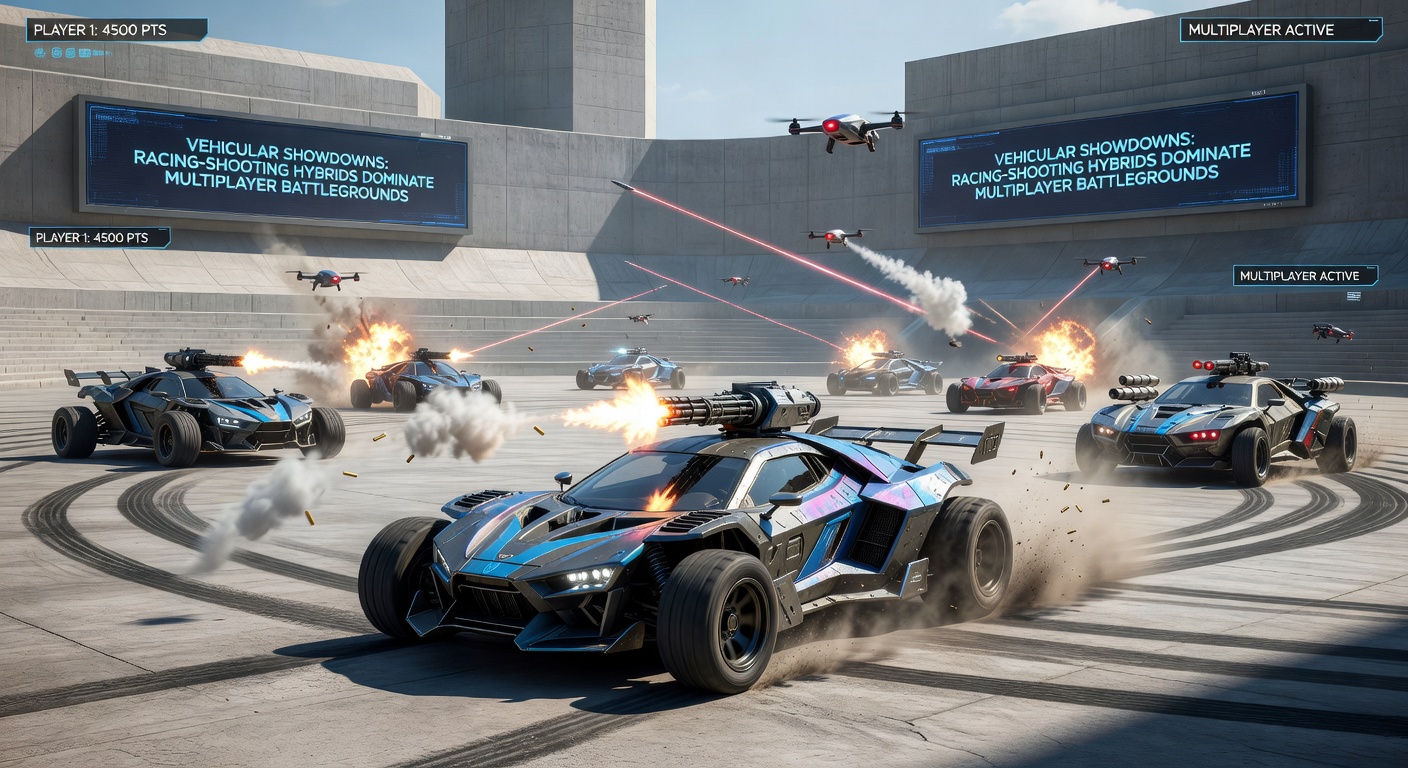
What's interesting surfaces in hybrid variants like Rocket League, where Psyonix (now Epic) swapped bullets for soccer balls but kept the vehicular aggression, boosting cars into aerial demolitions; although no guns, the demo system mimics collisions as weapons, driving 120 million lifetime players and RLCS prize pools topping $6 million annually.
Mechanics That Hook and Hold Players
Core loops thrive on velocity-versus-volley tension, where drifting corners demands split-second aim adjustments amid boost trails and smoke screens; engineers at studios like Wargaming embed realistic ballistics — gravity drops shells over distance, wind sways missiles — yet amp handling for arcade snap, so a Sherman tank corners like a sports car if upgraded right. Research from the Entertainment Software Association's 2025 report highlights how 67% of gamers play multiplayer weekly, with action hybrids like these snagging the lion's share of session times because they reward build experimentation alongside twitch reflexes.
Customization layers on replay value, players welding modular parts from cargo bays to cockpits, balancing speed stats against armor thickness; one study by researchers at the University of Ontario Institute of Technology analyzed 10,000 Crossout replays and found top builds averaged 15% higher win rates when speed mods outpaced raw firepower by 20%. So teams iterate post-loss, tweaking hover jets for anti-grav leaps that dodge minefields while countering with railguns.
Tech Powering the High-Speed Havoc
Unreal Engine 5 drives many frontrunners now, rendering Nanite-detailed wreckage that shatters in real-time as a pursuing buggy shreds your fender with gatling fire; Epic's Chaos physics simulates chain reactions where one exploding fuel tank ignites a pileup, scattering chassis across the map. Crossplay tech from platforms like PlayStation Network unifies lobbies, so a PC pilot squads with Xbox sharpshooters seamlessly.
Cloud servers handle the strain too, with AWS instances scaling for 16-player free-for-alls where latency under 50ms keeps shots registering true even during 200km/h pursuits; developers at Gaijin rolled out Vulkan API support in 2023, boosting frame rates 30% on mid-range rigs, which data shows retains casual players who bail if chugs hit during clutch moments.
Turns out, VR experiments add immersion — Twisted Metal: Black ports nod to haptic triggers rumbling with every mag dump — although full vehicular cockpits remain niche, prototypes from indie teams hint at seated sims blending Gran Turismo precision with Battlefield blasts.
Thriving Communities and Esports Arenas
Discord servers for Crossout clans swell past 500,000 members, hosting build contests where winners' designs drop as in-game blueprints; Twitch streams average 10,000 viewers for pro leagues, peaking during events like the Crossout World Championship that drew 1.2 million watches in 2024. Esports orgs like Team Liquid field rosters specializing in these hybrids, grinding scrims to perfect flank rotations that turn races into ambushes.
The Entertainment Software Association of Canada's 2024 industry profile reveals multiplayer vehicular titles contribute to 25% of gaming revenue north of the border, fueled by cross-region tournaments that pit EU precision drivers against NA aggressors. People who've sunk thousands of hours often share tales of epic comebacks, like a solo player weaving through a bullet hail to ram the flag carrier in overtime.
Horizons in April 2026: Fresh Tracks Ahead
As of April 2026, updates roll out across the board — War Thunder introduces hybrid drone carriers that launch scout racers mid-battle, while Crossout's spring patch adds zero-grav zones where vehicles magnetize to walls for upside-down shootouts; developers tease full Twisted Metal reboots hitting PS5 and PC later this year, reviving Sweet Tooth's ice cream truck with modern netcode for 32-player lobbies. Newzoo figures project the genre's market slice growing 18% year-over-year, propelled by mobile ports that shrink arenas for thumbstick mastery.
Indies crowdsource next-gen twists too, like procedural maps generating endless racetracks laced with turret nests; one Kickstarter from Australian studio Scrapyard Games hit $1.5 million, promising roguelite progression where lost vehicles fuel permanent garage upgrades.
Conclusion
Racing-shooting hybrids cement their grip on multiplayer battlegrounds through relentless innovation, from voxel-built war machines to esports spectacles that pack stadiums virtually; player bases swell because these games deliver pure adrenaline — speed the setup, shooting the payoff — all wrapped in communities that evolve faster than any nitro boost. Data underscores the trend's staying power, with millions logging in daily to claim digital asphalt supremacy, and as April 2026 unfolds, the exhaust fumes only thicken.